Where Traditional Freight Models Start to Break Down
As shipment volume increases and freight is delivered to more locations, point-to-point transportation models become harder to manage. Costs rise, delivery windows become inconsistent, and store-level execution becomes difficult to predict.
- Multiple handoffs increase handling time and damage risk
- Delivery schedules vary by carrier and location
- LTL costs scale poorly as volume increases
- Store teams lack predictable delivery windows
Pool distribution addresses these challenges by consolidating freight and executing delivery through structured, route-based operations.
How Transportation & Pool Distribution Works
Pool distribution is designed to move freight efficiently by consolidating shipments, reducing handoffs, and delivering through defined routes to commercial locations.
- Freight is consolidated at origin. Shipments from one or more shippers are grouped to maximize trailer utilization and reduce per-unit cost.
- Linehaul transportation moves freight to processing centers. Consolidated freight is transported to regional processing facilities for sorting and routing.
- Freight is sorted by destination. Pallets are organized by store or delivery location to prepare for route-based execution.
- Route-based final delivery is executed. Freight is delivered through consistent routes to ensure predictable schedules and reduced handling.
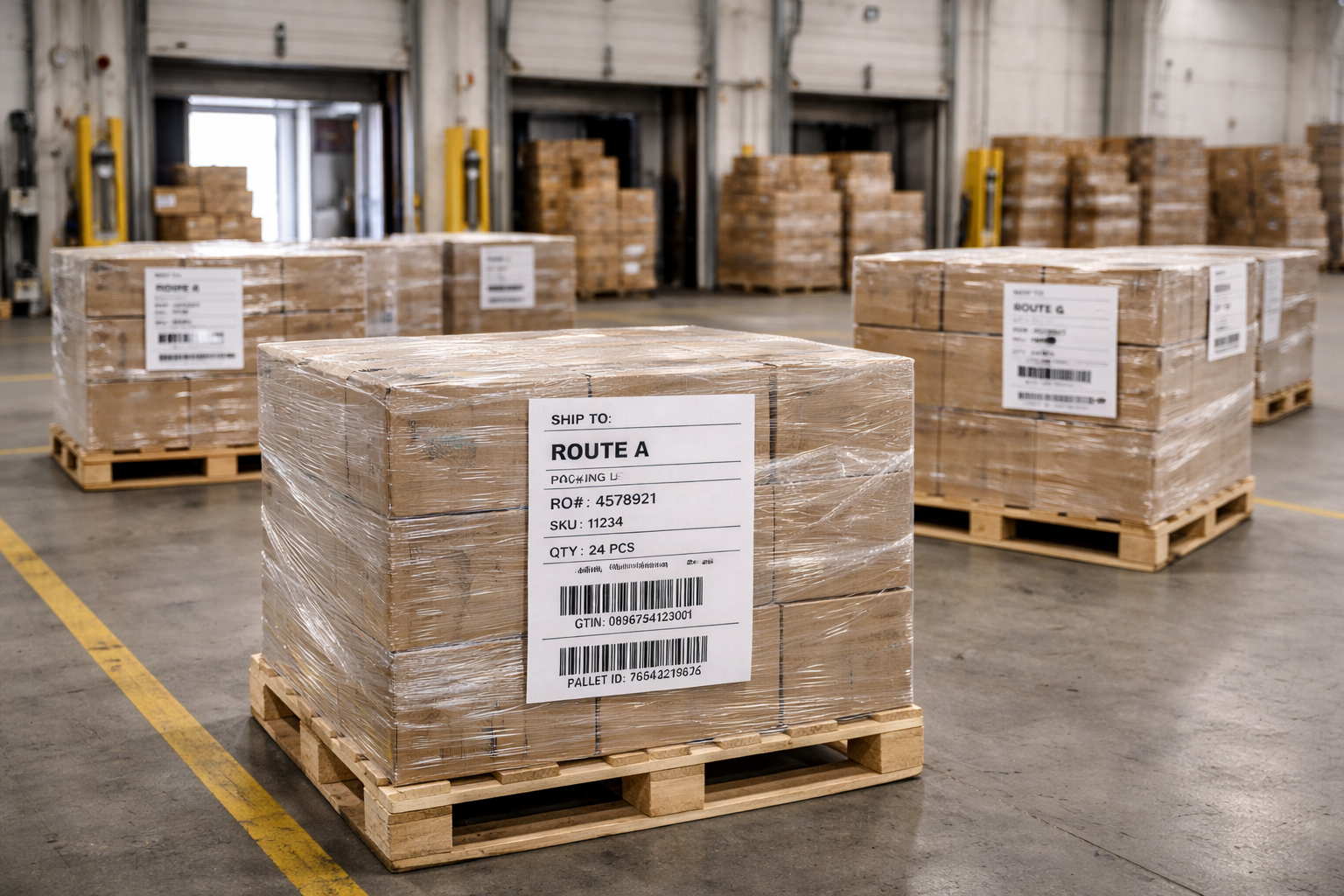
Processing Centers That Support Execution
Processing centers serve as controlled consolidation and distribution points within the transportation network. Freight is received, scanned, sorted, and staged for delivery according to defined routes and schedules.
This structure reduces unnecessary handling, improves delivery consistency, and provides operational control across regions without relying on ad-hoc transfers or unmanaged terminals.
Operational Value Created
- Lower transportation cost per unit. Consolidation and optimized routing reduce inefficiencies compared to fragmented LTL movements.
- Reduced damage and rehandling. Fewer handoffs lead to less freight handling and fewer delivery exceptions.
- Predictable store-level delivery. Consistent routes support reliable delivery windows and better labor planning at destination locations.
- Improved execution consistency. Standardized workflows support repeatable outcomes across regions and service areas.
Carrier Network & Coordinated Execution
Transportation services are supported by a nationwide network of vetted carrier partners and coordinated operating teams. This structure provides capacity flexibility while maintaining consistent execution standards.
Carrier performance is managed through defined processes, clear communication, and operational oversight — ensuring freight moves as planned, even as volume or routing needs change.
Transportation Supported by Visibility
Transportation and pool distribution services are supported by our Technology, Scanning, and Visibility capabilities. Freight is tracked through receipt, routing, and delivery to provide consistent insight into execution.
Learn more about Technology & Visibility →Looking for More Predictable Freight Movement?
We'll review your lanes, volume, and delivery requirements to determine whether pool distribution is the right fit.